

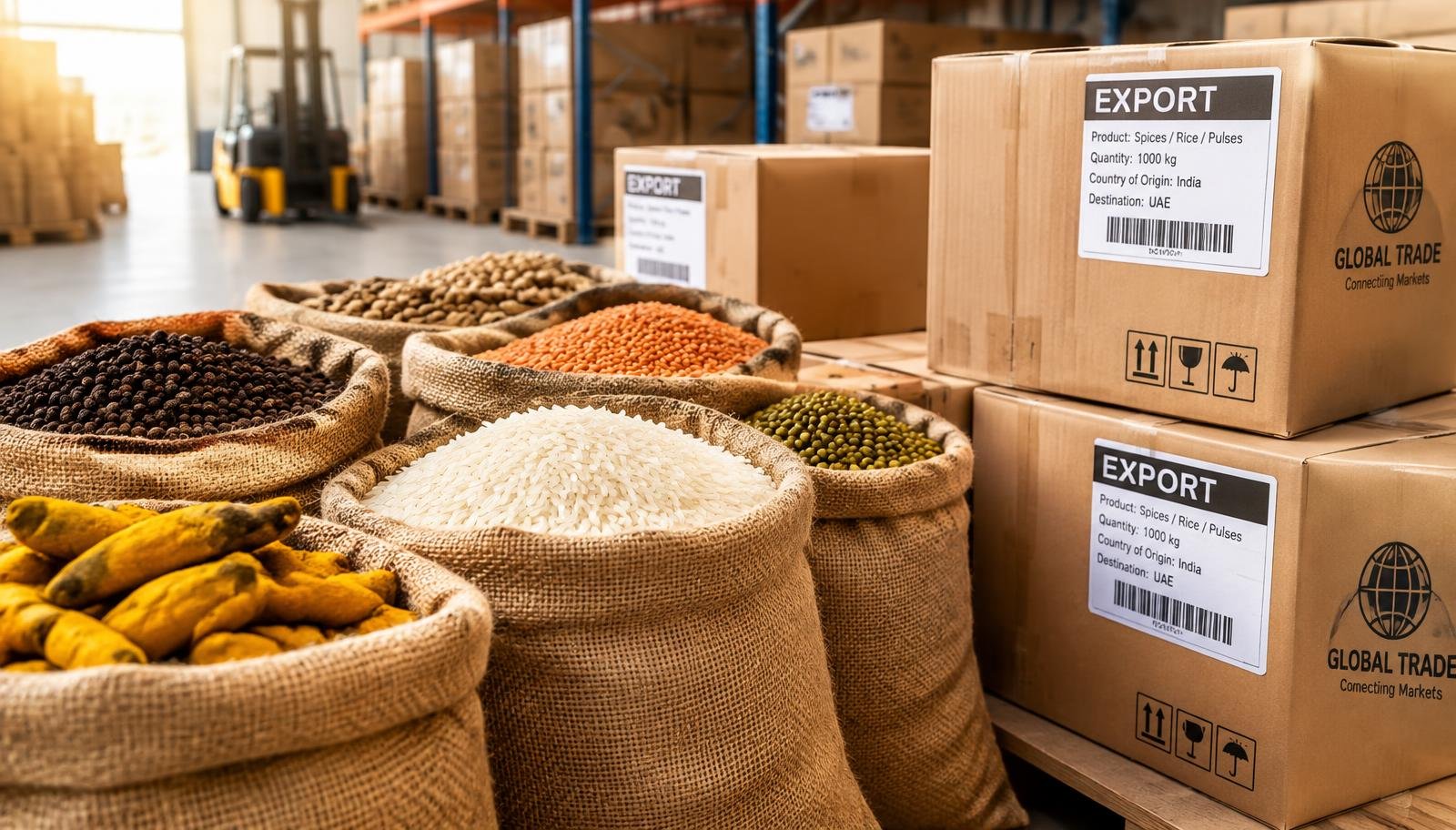
Packaging that protects the product — and the deal.
Choose a product to explore key considerations and commonly used packaging types.
Product
Moisture sensitivity, fragility, weight, odour and whether it is food or non-food.
Buyer requirements
Pack sizes, branding, labelling, palletisation and private-label specifications.
Country
Destination labelling language, packaging-material rules and wood-treatment standards.
Transport mode
Sea, air, road or rail — each brings different handling, stacking and climate stresses.
Product shelf life
Barrier protection needed to keep quality through transit and storage.
Regulatory requirements
Food-contact, safety, hazardous-goods or environmental regulations that apply.
Packaging by product
Rice
Protect grains from moisture, pests and breakage while keeping bags strong enough for stacking.
Key considerations
- Moisture and humidity control during sea transit
- Pest protection and clean, food-safe materials
- Bag strength for stacking and handling
- Retail vs bulk pack sizes as agreed with the buyer
Commonly used packaging
Packaging types explained
PP bags
Woven polypropylene bags — strong, lightweight and widely used for grains, pulses and bulk agricultural goods. Often combined with liners.
HDPE bags
High-density polyethylene bags offering good moisture resistance; used for powders, spices and granular products.
Kraft bags
Multi-wall paper bags, sometimes with plastic liners, suited to powders, flours, seeds and products where paper packaging is preferred.
Vacuum packaging
Air is removed to slow oxidation and moisture gain — useful for premium, dehydrated or shelf-life-sensitive products.
Cartons
Outer cartons group retail packs, simplify counting and improve presentation for distribution.
Wooden pallets
Base for unitised loads and forklift handling. Many countries require heat-treated, marked wood (ISPM-15).
Corrugated boxes
Single, double or triple-wall boxes balancing strength and weight for cartons, fragile goods and fresh produce.
Jute bags
Natural, breathable and biodegradable; traditional for some grains, coffee and pulses.
Food-grade packaging
Materials certified as safe for direct food contact, required for most edible products.
Big ambitions deserve
a strong beginning.
Let’s build the foundation of your import-export business, together.