
Good questions. Clear answers.
Practical answers to the questions new exporters ask most — plus how NexaVExport can help.
Export questions
Choose a business structure, complete core registrations (PAN, GST, IEC, a bank account with AD Code registered at your port, and RCMC where relevant), then select a product, research markets, build a credible brand and website, and approach verified buyers. Our Export Roadmap walks through all 21 steps.
Pick a product where you have reliable supply, consistent quality and a cost advantage. Check global demand, competition, export restrictions and certification needs before committing. Start narrow — one product done well beats ten done poorly.
Common channels include trade fairs, export promotion councils, B2B marketplaces, trade directories, embassy trade desks, LinkedIn and targeted email outreach supported by a professional website and catalogue.
Check official company registries, website and domain history, physical address, trade references and import records. Be cautious with urgency, unusual payment routes, requests for fees, or mismatched email domains. Prefer secure payment terms with new buyers.
For the exporter, advance payment carries the least risk, followed by a confirmed letter of credit. Documentary collection and open account carry more risk. The right choice depends on transaction value, buyer relationship, destination and professional advice.
Under FOB, the seller delivers goods on board the vessel at the origin port and the buyer pays sea freight and insurance. Under CIF, the seller also pays freight and minimum insurance to the destination port. In both, risk passes to the buyer once goods are loaded at origin.
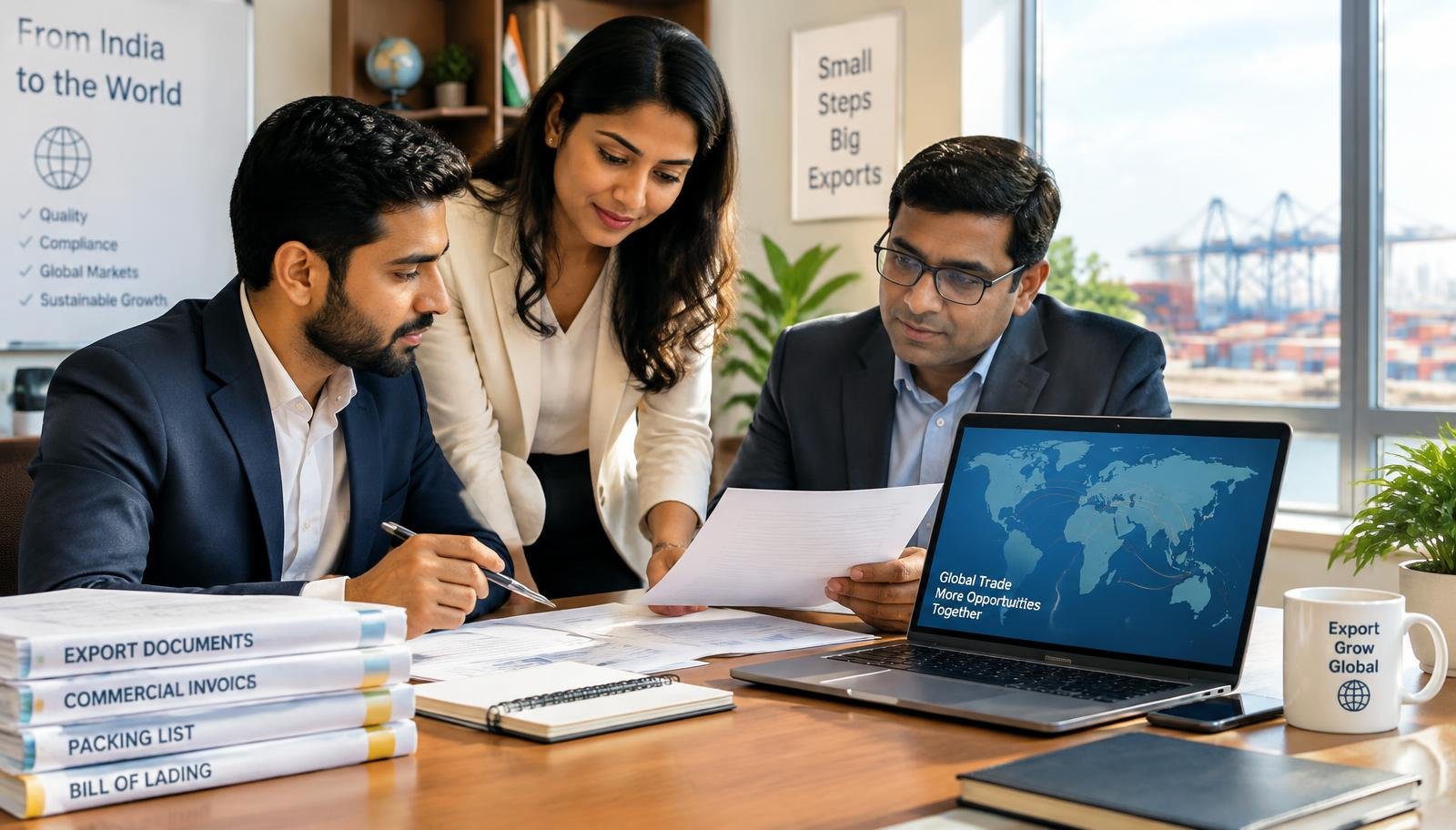
Typically a commercial invoice, packing list, shipping bill, bill of lading or airway bill, and often a certificate of origin. Depending on product and destination you may also need inspection, phytosanitary, health or quality certificates. Confirm with your customs broker.
The Importer Exporter Code is a 10-character code issued by the DGFT and linked to your business PAN. It is required for most import and export activity from India.
A Harmonized System code classifies products for customs worldwide. The first six digits are international; India uses eight-digit ITC-HS codes. It affects duties, restrictions and documentation.
The Authorised Dealer Code is issued by your bank and registered with customs at each port you export from, so export proceeds can be tracked against your shipping bills.
An RCMC from the relevant Export Promotion Council or commodity board is generally needed to claim many Foreign Trade Policy benefits, and some products require it. Check with the council for your product category.
Use export-grade materials that protect against moisture, temperature and handling; follow destination labelling and language rules; use compliant pallets (e.g. ISPM-15 treated wood); and plan cartons for efficient container loading.
Start with product cost, add packaging, labelling, inland freight, handling, clearance, bank and finance charges and your margin to get EXW. Add costs to vessel for FOB, then freight and insurance for CIF.
Send through a reliable courier with a proforma invoice marked "sample — no commercial value" where appropriate, clear labelling and tracking. Check whether the destination restricts the product. Many exporters charge for samples or courier costs to filter serious buyers.
Reply promptly and professionally from a business email. Clarify product specifications, quantity, destination, Incoterm and timelines, verify the buyer, then send a clear quotation or proforma invoice with validity and payment terms.
Know your full cost and minimum acceptable price, offer options (quantity tiers, Incoterms, payment terms) instead of simple discounts, confirm everything in writing and never compromise on payment security for a new buyer.
Getting started
Yes. We help individuals and entrepreneurs understand their starting point and bring their setup priorities together.
Not necessarily. Your product direction, sourcing access and business goals can be discussed before you commit to a setup plan.
You can discuss a specific area of support or a connected setup approach. The scope should be agreed around your needs.
Our role
No. We are an import-export business setup and consultancy company. We help you build your own business; we do not trade on your behalf.
No. Verification supports informed outreach, not guaranteed sales, payment or buyer performance.
No. Documentation and licensing support is guidance. Requirements and approvals depend on your circumstances and the relevant authorities.
NexaVTech is our parent company behind technology, websites, branding and digital business solutions.
Planning your consultation
Bring your business idea, current stage, sourcing plans, target markets if known and the areas where you need support.
They depend on the agreed scope and your starting point. No fixed fees or delivery timelines have been published here.
Not yet. It prepares a local business brief for you to download. Nothing is sent to NexaVExport or stored online.
Big ambitions deserve
a strong beginning.
Let’s build the foundation of your import-export business, together.